Showing posts with label historical fiction. Show all posts

Thursday, September 18, 2014

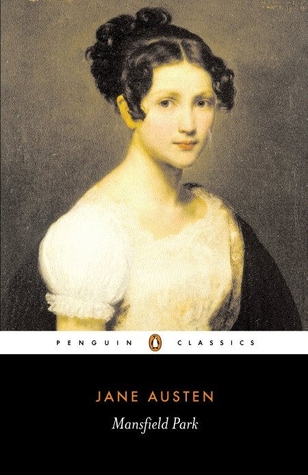
In Which I Must Have Landed in a Terrible Parallel Universe or: Mansfield Park by Jane Austen

Mansfield Park


Summary

Goodreads:  Taken from the poverty of her parents' home, Fanny Price is brought up with her rich cousins at Mansfield Park, acutely aware of her humble rank and with only her cousin Edmund as an ally. When Fanny's uncle is absent in Antigua, Mary Crawford and her brother Henry arrive in the neighbourhood, bringing with them London glamour and a reckless taste for flirtation. As her female cousins vie for Henry's attention, and even Edmund falls for Mary's dazzling charms, only Fanny remains doubtful about the Crawfords' influence and finds herself more isolated than ever. A subtle examination of social position and moral integrity, Mansfield Parkis one of Jane Austen's most profound works.


Thoughts

Person who is inhabiting my body right now - who are you and where did you put Elizabeth?  How is this even possible?!  I LOVE JANE AUSTEN.  That has been a defining fact of my life for well over a decade now.  And yet, here I am, and I freaking hated this book.  Not mild dislike, not meh feelings  -  hated. If I rated on pure feels this would be a one star.  But I can't justify rating this book lower than some of the other books I've rated two stars (although this is making me rethink my lack of one stars so far this year). Because it's still well written and whatnot, it's just...this plot sucks! 


Be warned, spoilers follow!

This book is so moralistic, and I actually think Maria Bertram's story might have been more sympathetic to discover.  I mean how sad is it that she's fallen in love with a man who toys with her, goes after her cousin, then retoys with her - but still doesn't love her?  In her place, don't you think she would have believed he loved her and would marry her?  Why wouldn't she think that? In another love story, it wouldn't be terrible she married someone else and then had an affair - if she was the main character, it would simply be tragic.  I think I would have connected with that story more than this one, which really punishes her for these decisions, even as the narrator acknowledges that it isn't just a fling for Maria - she truly loves Henry.  She'd be a much more sympathetic leading lady.

That being said, I don't dislike Fanny, but she and I are definitely opposed in our core beliefs.  A lot of people have a problem with her character because she's a super goody-goody. Which I don't disagree with at all, seeing her character develop from being very withdrawn to blossoming into a character who is much more open - actually because of Henry Crawford, but more on him later - is beautifully done.  There's nothing wrong with her exactly, but as I tend to gravitate to more bold heroines, it's not surprising she's not one of my favourites.  I think a lot of her opinions are spot on. For example, I agree that Mary isn't a good match for Edmund - but it's less to do with the moral reasons and more to do with the simple fact that they have entirely different interests/life goals.  And unlike Fanny, I don't think Mary's reaction to Maria/Henry's affair was appalling - she simply wanted to do what was best for her family, and...well I guess I just would have acted and believed the same things as Mary.  I think her reasonings and reactions were smart (and even though it was perhaps not wise to confess her thoughts on Tom's being ill...when your entire future is based on your husbands income and place in society...doesn't it make sense that she'd be interested in what Edmund's future changes might be?  I'm kind of used to that kind of thinking in my historical fiction!)  And since Mary is Fanny's foil, I'm automatically on the opposite side of the spectrum here.

As for the love interests...I'm sorry but Edmund is boring, and he totally doesn't deserve Fanny.  He spends the entire book mooning over Mary - to Fanny.  And then after all that, all we get at the end of the book was - yes he was super sad about Mary, and when it was appropriate to move on he did, and he realized...oh yeah Fanny is pretty cool!  THAT'S TELLING, NOT SHOWING JANE.  You are better than this!  There was no gradual change of heart we saw, and there was no love confession.  NO. LOVE. CONFESSION.  How can you go from reading things like:

“In vain have I struggled. It will not do. My feelings will not be repressed. You must allow me to tell you how ardently I admire and love you.” 

And most especially this:

"You pierce my soul. I am half agony, half hope...I have loved none but you."


To a simple summation of what happened! 

But...but...I was promised a love confession!


Seriously this change of heart happens in like the last few pages of the book, and all of a sudden they're married! It reads like an epilogue, actually.  If they are supposed to be the main romantic focus here, I want some character development here! Not having super intense events happening (the scandals happen all together and towards the very end)...and then it immediately diffuses into - these people were happy, these people weren't here's a quick version of why, the end!  It's like she skipped the entire falling action bit that's supposed to go between the climax and the conclusion!  So you really don't feel like Edmund ever really loves Fanny nearly as much as she loves him.  And that makes me unhappy.  Edmund's character never evolves from start to finish in the book.  He is literally exactly the same person at the beginning of the book as he is at the end, and since he's a main character I think that odd, since Fanny, Henry, and Mary at the very least go through some pretty major character development.  And since he's supposed to be the leading man...I expect more.  (Or as I put in my goodreads review - Edmund is a boring sissy boy.)

On the flip side, I thought Henry Crawford showed real promise.  It feels like with his attention to Fanny, he is the one who really brings her out of her shell.  While she's comfortable with Edmund, it never goes beyond his company.  With Henry, she starts being more open with everyone.  He also woos her, and makes her feel like she's the only one he is into, and it feels like he's truly falling in love with.  Which is why it comes as such a shock when he runs off with Maria - even the explanation for that doesn't feel like it fits his character.  While I can see he is a guy who is easily distracted (which is not an attractive attribute of his) - if the explanation is that his pride was stung by someone he's already won, wouldn't he still be after Fanny more than after a woman he had already made his conquest once?  That reasoning just doesn't ring true to me.  He woos Fanny despite her significant (but relative) poverty in comparison to her cousins, despite meeting her family.  He still woos her.  And I honestly don't believe it's because she kept saying no - I think that peaked his interest at the start, but I feel like he really did fall in love with her through the process.  No, he isn't a perfect love interest or character.  I feel as far as Jane's "bad boys" go, he is actually not so bad.  That being said, I totally could have been convinced of Edmund as a love interest...if Jane had ever made it feel like more than just a one-sided love of Fanny's part.  (Actually, maybe those parallels with Maria are on purpose, but because Maria is less moral she doesn't get a happy ending?)   The whole ending just felt like it was really half-hearted and lazy.


I'm going to go re-evaluate my life now.  Things are different now that there's a Jane Austen book I loathed.


Wednesday, July 9, 2014

Mini Reviews: Daughter of Camelot by Glynis Cooney

Daughter of Camelot (Empire of Shadows 1)

 Summary

GoodreadsRaised in the shadow of a fort dedicated to training Knights of the Round Table, Deirdre thirsts for adventure. Instead, at 14, she is sent to court to learn the etiquette and talents of a young woman. Court life, however, is more fraught with danger than she expected, and Deirdre finds herself entangled in a deadly conspiracy that stretches deep into the very heart of Camelot. All Deirdre thought she knew and believed in—loyalty, love, bravery—is challenged when she embarks on a quest to defy Fate and save the King


Thoughts

I was pretty iffy about this book when I started.  It immediately separates Deirdre from all the other female characters by putting them down, which I strongly dislike.  Throughout the book though, it's clear that Deirdre grows up - so her opinions on the role of women in society changes as the book progresses.  She starts respecting what they do and the different sort of courage it takes to be a healer or to find out important gossip instead of charging into battle.  There's also a dwarf character introduced who I LOVE and who I think has a really interesting story (even if I can't remember much of it now).  The book appeared pretty well researched (even if our main character had that modern feeling we often get when we want a character to have our "more cultured" values than what was believed at the time), but I give the same disclaimer I make anytime I say this - I don't know anything about medieval history, so I could be ridiculously wrong on that front.

Overall, this book wasn't for me.  There were parts that I really loved - like when the dwarf becomes involved, and when Deirdre begins to respect her older sister, but there were lots of parts that weren't really for me either (and sadly I don't remember the specifics of why, or I'd tell you in case said things don't bother you).  I'd recommend it to the avid Arthurian fantasy readers.

Wednesday, April 16, 2014

The White Princess (The Cousins War #5) - Philippa Gregory

The White Princess (The Cousins' War,  #5)


Summary

GoodreadsPhilippa Gregory, #1 New York Times best­selling author and “the queen of royal fiction” (USA Today), presents the latest Cousins’ War novel, the remarkable story of Elizabeth of York, daughter of the White Queen.

When Henry Tudor picks up the crown of England from the mud of Bosworth field, he knows he must marry the princess of the enemy house—Elizabeth of York—to unify a country divided by war for nearly two decades.

But his bride is still in love with his slain enemy, Richard III—and her mother and half of England dream of a missing heir, sent into the unknown by the White Queen. While the new monarchy can win power, it cannot win hearts in an England that plots for the triumphant return of the House of York.

Henry’s greatest fear is that somewhere a prince is waiting to invade and reclaim the throne. When a young man who would be king leads his army and invades England, Elizabeth has to choose between the new husband she is coming to love and the boy who claims to be her beloved lost brother: the rose of York come home at last.


Summary

This is really, really intense right from the start.  You are catapulted right into the middle of Elizabeth's anguish over the death of her lover, and at first I thought I was going to love this, especially as you start out with a bang.  I'm not going to talk about why this is a bad book, because I don't believe it is.  I've read at least half of Philippa Gregory's novels, and I've always enjoyed them to varying degrees, so the writing in this is very much on par with her other novels.  Instead, I'm going to talk about why this book was not for me personally.

I am horrified by the amount of rape in here.  I wish I could say it was unnecessary, but as it is historical fiction there is a chance this happened, and it absolutely reflected the societal views of the time.  So it is necessary.  But even from the beginning I wondered if I would be able to make it through, and how on earth I was supposed to support these two characters falling in love.  I don't care if it reflects societal norms, I can't support any man who repeatedly rapes someone.  And beyond that, he's completely under his mother's thumb (and she tucks him into bed which is weird).  But that's the least of my issues with Henry.

I also didn't realize there were so many books in this series!  Having read Gregory's Tudor series in a completely random order, I feel like generally her books don't have to be read in a certain order.  That being said, I do feel like it would enhance my understanding of what's going on and keeping everyone straight (WHY ARE THERE SO MANY DAMN ELIZABETH'S?!)  Also Richard is her Uncle...that doesn't come clear unless you try and figure out all the relationships but ummm...I'm pretty sure even back then uncle/niece was not kosher?  Maybe I'm wrong, and that's just super gross to me.

In general, my biggest issue with the book outside of the rapes that thankfully stop about half way through the book (maybe sooner), was simply that it was....boring.  I don't deal well with books about obsession - while I appreciate the creepy bits of Edgar Allen Poe's writing, I don't particularly enjoy most of his stories.  I thought Bellman & Black was THE WORST.   I just can't get behind obsession!  And this whole book is "Henry freaking out about potential boy/king guy and main character continues to be powerless".  Seriously.  That's the entire plot...and it's like it is on loop.  THIS GOES ON LIKE 5 TIMES.  I get it once, maybe even twice?  But after that?  I'm out.

None of this is on Philippa Gregory, except perhaps her choice in characters and time period, because honestly that's what happened (judging by my skilled Wikipedia searches).  But reading a whole book about a woman who doesn't love (but sort of does?) her husband, who has no control over anything, focused on a man who is terrified/obsessed with a boy, is just not for me.

TL;DR

This book wasn't for me because of the subject matter, but it is otherwise what one expects from Philippa Gregory's writing.  Like her? Read through this post and see if anything bothers you, and decide from there.

Saturday, January 25, 2014

Bellman & Black - Diane Setterfield

 I received this book from the publisher in exchange for an honest review.

In other news, I'm using Grammarly to check for plagiarism because if aliens ever take over Earth, I think not being a plagiarizer will make them more sympathetic to my cause. (My cause of please don't kill me!)  (And I'm also using it because my sentences tend to have an infestation of commas.  And parenthesis.  Like this one.  Oops?)

Bellman & Black: A Ghost Story


Summary

GoodreadsBellman & Black is a heart-thumpingly perfect ghost story, beautifully and irresistibly written, its ratcheting tension exquisitely calibrated line by line. Its hero is William Bellman, who, as a boy of 11, killed a shiny black rook with a catapult, and who grew up to be someone, his neighbours think, who "could go to the good or the bad." And indeed, although William Bellman's life at first seems blessed—he has a happy marriage to a beautiful woman, becomes father to a brood of bright, strong children, and thrives in business—one by one, people around him die. And at each funeral, he is startled to see a strange man in black, smiling at him. At first, the dead are distant relatives, but eventually his own children die, and then his wife, leaving behind only one child, his favourite, Dora. Unhinged by grief, William gets drunk and stumbles to his wife's fresh grave—and who should be there waiting, but the smiling stranger in black. The stranger has a proposition for William—a mysterious business called "Bellman & Black" . . .


Quotes

When the mysterious sky dance is over, the spectators blink and breathe and come to themselves after their long enchantment.  They feel mild surprise at finding themselves contained in their bodies on this sloping hillside:  for the last half hour they have been elsewhere.  Their souls resettle in their bodies.  Fingers stretch and toes wriggle experimentally.  Their rib cages and unfeathered flesh feel faintly foreign to them.


Thoughts

I want to preface this review by saying...I hate to have to do this.  Diane Setterfield's debut, The Thirteenth Tale was one of the most amazing books I have ever read.  It is easily in my list of all time favourite books.  It has EVERYTHING - crazy levels of suspense, well thought out characters, a twisty plot, and some of the most lush, vivid, beautiful writing I have ever had the pleasure of reading.  I have been waiting for Diane Setterfield's next book for YEARS.  Every few months I'd search for when the next book was out, so when I found out about this book (and when I got approved for an ARC) I was ecstatic.  

Bellman & Black has the same beautiful language and gothic feel as The Thirteenth Tale, but sadly none of the suspense.  Reading about a man's obsession with making money just isn't what I'm into.  There are only so many times I can read the details of a mill's accounting before I start getting agonizingly bored.  Especially when I don't understand what the point of it all was!  

From here on out be careful of minor spoilers!  The first part of the book details what a charmed life William has - he's handsome, charming, has had luck with pretty much ALL the ladies in town, is incredibly intelligent, and ends up running a mill.  Unfortunately in the next section of the book, it's all downhill from there.  And throughout all of this William comes off anywhere from being a...jerk, and incredibly boring.  Worst possible combination I can think of.  And the worst part of all of this is...I STILL DON'T GET IT.  I really, really don't know why we had to know all the details of the accounting.  I think I get who Black is?  But what was the deal?  What was he supposed to do?  It makes me SO. ANGRY.  If I had to read this entire book of nothing I at least need to know WHAT WAS IT ALL FOR?!?!?!

On the upside, I actually liked all the asides with facts about the rooks.  For one, it made a break from the monotony of what it's like to run a business.  It also involved some of Setterfield's most beautiful writing.  I didn't include it here, but the last line of the book is everything I love about last lines in a book.  (And of course it involves rooks)


Overall  

I wanted to love this.  I adore Setterfield's writing, and I absolutely will buy her next book regardless of my feelings on this one.  I imagine it is always incredibly difficult to write another novel when your debut has been so successful with both critics and readers.  I pray that she gets the chance to release another novel because I know I'm not the only one out there rooting for her, despite not loving this novel.

Thursday, January 16, 2014

The Book Thief - Markus Zusak

The Book Thief 

 Summary

GoodreadsIt is 1939. Nazi Germany. The country is holding its breath. Death has never been busier, and will become busier still.

Liesel Meminger is a foster girl living outside of Munich, who scratches out a meager existence for herself by stealing when she encounters something she can’t resist–books. With the help of her accordion-playing foster father, she learns to read and shares her stolen books with her neighbors during bombing raids as well as with the Jewish man hidden in her basement.

In superbly crafted writing that burns with intensity, award-winning author Markus Zusak, author of I Am the Messenger, has given us one of the most enduring stories of our time.


Thoughts

 Let me start with this:  This was a truly memorable book, and I am glad I read it.  Now remember that I have said this as you read through the rest of this post.

So.  I finally read this.  It took me 5 years to work up the courage to do it, and I'm glad I did.  Even if I will never read this again.  I am not going to review this book.  There are so many great reviews out already, and honestly I just don't want to revisit the details of this book.  I am going to talk about how it made me feel.  Guys, this book destroyed me.  I honestly can't think of a book that made my soul hurt more at the end of the book, and that includes The Amber Spyglass, The Bridge to Terabithia, and The Island of the Blue Dolphins combined.  I don't think I knew how invested I was in the characters until...well things happened.  You know at the beginning who is going to die, so it isn't even a surprise!  I seriously ugly cried through the last quarter of this book.  I literally had to put the book down because I was crying so hard I couldn't read.  It wrecked me.  And I still can't tell you why this hit me so hard (I mean it surpassed my epic crying in the last Harry Potter book!  And I had a connection with those characters for years! I could still read the end of the book after the last battle, if barely)

So yes, this book is phenomenal, and I'm glad I read it, even if it hurts to think about.  But what I don't understand...people do this to themselves YEARLY!  They reread this book every. single. year.  How do you survive that?!?  I read this book and immediately went into hermit mode and didn't want to talk to anyone about it at all!  I had been looking forward to watching the movie, but even Geoffrey Rush won't get me to see this, because why would you want to relive this??

Would I recommend this to everyone?  No.  Should everyone read this?  Probably.  But you know what?  Some people don't like reading books that hurt, and I wouldn't inflict this book on anyone who wasn't prepared to be devastated. 

Wednesday, December 11, 2013

A White Room - Stephanie Carroll

A White Room

Summary

GoodreadsAt the close of the Victorian Era, society still expected middle-class women to be “the angels of the house,” even as a select few strived to become something more. In this time of change, Emeline Evans dreamed of becoming a nurse. But when her father dies unexpectedly, Emeline sacrifices her ambitions and rescues her family from destitution by marrying John Dorr, a reserved lawyer who can provide for her family.

John moves Emeline to the remote Missouri town of Labellum and into an unusual house where her sorrow and uneasiness edge toward madness. Furniture twists and turns before her eyes, people stare out at her from empty rooms, and the house itself conspires against her. The doctor diagnoses hysteria, but the treatment merely reinforces the house’s grip on her mind.

Emeline only finds solace after pursuing an opportunity to serve the poor as an unlicensed nurse. Yet in order to bring comfort to the needy she must secretly defy her husband, whose employer viciously hunts down and prosecutes unlicensed practitioners. Although women are no longer burned at the stake in 1900, disobedience is a symptom of psychological defect, and hysterical women must be controlled.

A novel of madness and secrets, A White Room presents a fantastical glimpse into the forgotten cult of domesticity, where one’s own home could become a prison and a woman has to be willing to risk everything to be free.


Thoughts

I definitely enjoyed this book, but I think it's one of those books that you are totally absorbed in when you read it...but if you think too hard about certain aspects it requires you to suspend quite a bit of belief in a lot of things.

The pacing in the beginning was sooooo slow!  It was beautifully written (My copy wouldn't allow bookmarks in it or I would have an example quote for you.  Everything is quite descriptive), but it definitely dragged.  Once you get past all the creepy house descriptions though, it's utterly gripping!  The suspense is crazy!!  Whatever complaints I have about the characters being a bit two-dimensional or the weird crazy house stuff, I completely put aside as I got sucked into this story.  I don't want to say too much because a lot of the suspense is built on coming to the book not knowing much more than what is written on the back cover, but trust me.  If you read this and are finding yourself stuck WAIT.  As I said, once you get past the house bits, the story takes you for a rollercoaster ride.  (I'm pretty sure I just made that saying up.  YOU ALL MUST USE IT NOW.)    Beyond the suspense, the plot itself is very interesting.  I know very little about the history of medicine which is a big part of this book and it was fascinating!  Not only in relation to women, but in general.  This is set right around the time that germs were becoming common knowledge.  While there is a big focus on medicine and techniques of the time, it doesn't weigh the story down.  In fact it makes the story even more interesting. 

Unfortunately, a book can't thrive on plot and suspense alone.  While I feel like Emeline was very well written, I didn't get a good feel for any of the other characters.  The villains are villainish, and the good guys are...sometimes villainish.   It adds to the suspense that you don't know who's on Emeline's side, but I feel like character development was sacrificed for this (and we all know characters are #1 for me, so this might not bother most other people).  I was especially unconvinced by the romance and the ending seemed rather too convenient.  But that being said, I am glad it ended the way it did.

In a few ways this reminds me of a historical fiction adult version of the Mara Dyer series.  If you're at all interested in any combination of those things, I'd check this out.  Part of this is how well the suspense is played out (and we all know that the suspense in Mara Dyer about did me in it was so crazy).  Another part of this was Emeline's madness.  I personally didn't really understand why she was seeing things really, but it adds to the suspense as I wasn't sure if she really was crazy.  (Starting to sound familiar?)

 But on to the parts of the story that I loved and have very little to do with the mechanics of writing.
The subject for this novel is near and dear to my heart.  I see how far we have come (and how far we haven't) as women in society now, compared to a century ago - when midwives considered criminals, hysteria was a diagnosis and had...unpleasant solutions (They thought the uterus wandered into your head!  What?!), when abortion was a crime, when disobedience in a woman was diagnosed as a mental disorder.  Literally.  They could put you in the madhouse if you disobeyed your husband or parents.  No questions asked.  In a lot of ways this paralleled an earlier version of The Vanishing Act of Esme Lennox, one of my all time favourite books.  I always love books like these because I think more needs to be written about this time period and women's rights (or really women's rights throughout the 20th century).  The awareness needs to be there.  It hasn't been so long since we've had the rights we do now, and it's still a battle.  A lot of people have started to dislike the word feminist and the sort of people it stands for.  You should definitely read that article - it's an interesting look at feminism and what it means to people (and also Joss Whedon).  Feminism for me still stands simply for equal rights between genders.  I think a lot of us take for granted what our predecessors lived through and what they have done to make our life the way it is now.  We shouldn't lay back and think "that's just the way it is" - we have to keep fighting for equality not only in our laws but in the way society views us.  We have to keep improving for all the generations that follow us.


Overall

Despite the flaws I listed, I would definitely recommend this book.  It is utterly readable and it accurately (to my knowledge - the book seems well-researched) depicts a time in our history that is extremely important to know as a woman.

Wednesday, November 27, 2013

Seeing Red - Kathryn Erskine


I received a copy of this book in return for an honest review.

Seeing Red

Summary

GoodreadsNational Book Award winner Kathryn Erskine delivers a powerful story of family, friendship, and race relations in the South.

Life will never be the same for Red Porter. He's a kid growing up around black car grease, white fence paint, and the backward attitudes of the folks who live in his hometown, Rocky Gap, Virginia.

Red's daddy, his idol, has just died, leaving Red and Mama with some hard decisions and a whole lot of doubt. Should they sell the Porter family business, a gas station, repair shop, and convenience store rolled into one, where the slogan -- "Porter's: We Fix it Right!" -- has been shouting the family's pride for as long as anyone can remember?

With Daddy gone, everything's different. Through his friendship with Thomas, Beau, and Miss Georgia, Red starts to see there's a lot more than car motors and rusty fenders that need fixing in his world.

When Red discovers the injustices that have been happening in Rocky Gap since before he was born, he's faced with unsettling questions about his family's legacy.


Thoughts

So I basically spent this entire book on the verge of tears.   I had NO idea what I was getting to with this book.  It's set during the 70's and it deals with the aftermath of the civil rights movement and the rampant sexism that was still in place.  This book is powerful.  It isn't that I was on the verge of tears because I was constantly devastated (although don't get me wrong, there are DEFINITELY heart breaking moments) - they were more tears of shock and frustration at what Red was dealing with.  And despite what we think about it now, this is barely even history.  It is a very, very close past.

I don't think I'm alone in seeing overt racism and sexism in the US as something in the distant past.  (I mean the kind where you get lynched or that domestic abuse was not really a police matter - OVERT overt) I'm not saying it doesn't still exist - unfortunately, I think that is part of being human.  A minority of people are always going to feel that way about us.  But a lot of giant steps were taken to solve many of these issues before I was born.  But when you say the seventies...that was not that long ago.  That was in my parent's time. That doesn't sound as long ago as it feels.

This book deals with so many issues - racism, sexism, loss of a parent, growing pains, domestic abuse, where blame stops, sins of your ancestors - I mean the list goes on.  Despite all of this, it's not a difficult book to get through.  I know that sounds hard to believe considering what that list is, but the writing is well-written, but simple, and the characters are so relateable I could NOT put it down, and stayed up til 3 am to finish it!

Every thing in this book is so layered - in a lot of ways it reminds me of To Kill a Mockingbird (I know I have said this about another book only a couple weeks ago - I promise not everything reminds me of TKaM!)  Sometimes the reader has things figured out way before the character in the same way that in TKaM, Scout might say something and not fully understand what it meant, whereas the reader knew exactly what was happening.  It's not like a mystery where it's unfortunate that you know things before the narrator does.  It really sets up different levels of understanding depending on the reader's experience, which is why I think it would be a great book for classrooms or from a parent as an introduction to issues.  This book is also a great example as to why the Bechdel test isn't a measurement of how well a book displays women in literature, it's simply an observation of their roles.  Seeing Red doesn't pass the test as the book is narrated in first person and our narrator is a boy, but it strongly advocates male/female equality (it's not preachy though, don't worry).  I'm not sure I've read a book that so strongly shows why we need it, and what it means when we don't have it, and it was very well done!

My only complaint is Thomas.  Yes, what Red did was awful.  But Thomas decided to stop being friends with him long beforehand, and Red stood up for him, even if he made some grievous errors directly beforehand.  He might have taken a second to recover, but he did what was right.  I don't see why Red is the only one to blame here, or that his sins are unforgiveable.  Most of my problem is not so much Thomas's reaction to what Red did (because I definitely get that), but more that he stopped being friends before that whole situation without a good reason.  Part of that is a me thing...I have loyalty issues.  You better have a damn good reason to stop being best friends with someone *spoilers* and that person being white is not a good reason.  Perhaps Thomas meant it as self preservation, but Red had done nothing at that point to deserve judgement because of his race.  That's racism as well. *spoilers*.  But other than an issue that is more of a personal complaint than an actual criticism of the book, this book is really amazing, and I really recommend it.  If you are looking for a book to expand your child's (I say child lightly, I don't think this is a book for someone who isn't ready for it) awareness of issues, or to have a book that might open up a dialogue between the two of you, this should definitely be at the top of your list!

Sunday, November 17, 2013

Exit the Actress - Priya Parmar

Exit the Actress

Summary

Goodreads:  While selling oranges in the Theatre Royal, Covent Garden, sweet and sprightly Ellen "Nell" Gwyn impresses the theater’s proprietors with a wit and sparkle that belie her youth and poverty. She quickly earns a place in the company, narrowly avoiding the life of prostitution to which her sister has already succumbed. As her roles evolve from supporting to starring, the scope of her life broadens as well. Soon Ellen is dressed in the finest fashions, charming the theatrical, literary, and royal luminaries of Restoration England.

Ellen grows up on the stage, experiencing first love and heartbreak and eventually becoming the mistress of Charles II. Despite his reputation as a libertine, Ellen wholly captures his heart—and he hers—but even the most powerful love isn’t enough to stave off the gossip and bitter court politics that accompany a royal romance.

Telling the story through a collection of vibrant seventeenth-century voices ranging from Ellen’s diary to playbills, letters, gossip columns, and home remedies, Priya Parmar brings to life the story of an endearing and delightful heroine.


Thoughts

Oh how I love well written historical fiction!  Seriously, it is one of my favourite things ever, and Priya Parmar has done such an excellent job with this book.  I read Dark Angels by Kathleen Koen earlier this year which was set during the same time period, just a little later.  It began in France, so it was interesting seeing all these characters I'd read about before, but seen in a new light.  That's another thing I love about historical fiction (not that you could tell I like the genre judging by what I've reviewed on the blog.  Must remedy this!) - you get the same characters but so many different facets of them, which always makes it interesting even when you've already read a book about that character, and even better if they were just a side character in another book!  Before reading this book, the only thing I knew about Nell is that she is one of the most popular mistresses of all time, and that she befriended the queen, which made me excited about this book from the get go!

Despite having read about a similar time period, much of these events preceded Dark Angels, and I learned so much!  Like did you know that there is a published female writer, Aphra Behn, from this time?  I didn't!  It made Nell's independence much more believable to me.  I also loved the amount of detail spent on large events that happened during this time period (a big London fire, plague - incidentally the shut down of London during this reminded me of a zombie apocalypse, but that's a musing for another time).  Honestly most of these are brushed over in historical novels I've read in the past (generalizing, and I'm speaking of historical novels and not just set in this time since I've read a grand total of one other during Charles II's reign.  And therefore there might not have been crazy things like this happening during all those other books settings').  There was a lot of attention to smaller details like the types of fabrics and styles as well as people's beliefs which felt genuine to me (but then I am not well researched in these things so take that with a grain of salt).  Nell wasn't some liberated woman just set in the 1600s, nor did she (or other characters) think that the doctors' solutions to things were barbaric (to my recollection).  It always bothers me - particularly the latter part - when I come across that in historical fiction, because that sort of thing was normal to them, and honestly most people wouldn't have the education to even question whether the practice was dumb or not.  Again, not a researched opinion necessarily, but it's my opinion on that so there.  Tell me I'm wrong!

The story is told primarily through her personal diary, but between chapters the book adds snippets of gossip, recipes, and correspondence between other characters to get in world events and to add authenticity to a lot of the beliefs people held.  I thought it was so interesting how much the court and royalty were discussed, as well as politics in the lower classes.  I honestly think they were more up to date and informed in comparison to most people I know (sadly myself included now that I rarely watch the news!  Of course, this is just coming for this book, but still!  And having had time to think about it, I realize that courtiers and royalty are equivalent to our celebrities, and sadly I feel like we don't pay much attention as a nation to the celebrities involved in charity and political events and more to sex scandals.  So on second thought maybe as a race we haven't changed very much!  I had expected more of her life with Charles, but really that was only the last third of the book.  It focused a lot on her early life and her life as an actress.  This next part is slightly spoilery (but not enough to white out) so read the rest of the paragraph with caution!  My biggest quibble with this book is that Nell is constantly citing her wish for independence and how she won't give up the theatre...but then with very little fight, she does.  And that seemed like sort of a let down (I know, I know historically I'm sure she did give it up so that's not something you can change in a story haha), but also like it didn't fit with her character.  I might have given her a different reason or...I don't know.  A more compelling reason.

My favourite part of the book was definitely the side characters.  You get such a colorful crew, particularly when they are primarily made up of actors and actresses!   I seriously shipped Nell's sister Rose and...ah damn.  Duncan?  Durst?  I FEEL LIKE A FRAUD FOR FORGETTING HIS NAME!  I wished with all my heart for them to get together during the book (and I'm not going to tell you if they do or not).  It was really strange for me to feel so involved with secondary characters (particularly since I cared way more about Rose and boy I cannot remember the name of than I did about Nell and her lovers).   I particularly loved Teddy.  I thought it was interesting that Teddy was a fairly well-known cross dresser, and that these sorts of things semed to be generally accepted (as long as it was done on the down low, even though everyone knew about it...which seems strange).  I'm assuming since this was mentioned throughout the book, that this is based on historical fact (really you just need to be convincing for me to believe things, I'm terribly gullible!) and that really surprised me!  Beyond that though, Teddy is a wonderful friend, delightfully funny, and...OH MY GOD IS IT SNOWING?!?!   It's totally snowing right now.  Well.  I'm not going outside today.  (Of course it won't be snowing when this posts.  Or rather...I hope it isn't...)

Oops.

I'm having a hard time focusing so I'm just going to skip to...

Overall

I think this is a great book both for historical fiction lovers and for those new to the genre.  It's very readable, and it's rekindled my need to go read all the historical fictions!

Sunday, November 10, 2013

Sapphire Blue (Ruby Red #2) - Kerstin Gier


 Summary

Gwen’s life has been a rollercoaster since she discovered she was the Ruby, the final member of the secret time-traveling Circle of Twelve. In between searching through history for the other time-travelers and asking for a bit of their blood (gross!), she’s been trying to figure out what all the mysteries and prophecies surrounding the Circle really mean.
At least Gwen has plenty of help. Her best friend Lesley follows every lead diligently on the Internet. James the ghost teaches Gwen how to fit in at an eighteenth century party. And Xemerius, the gargoyle demon who has been following Gwen since he caught her kissing Gideon in a church, offers advice on everything. Oh, yes. And of course there is Gideon, the Diamond. One minute he’s very warm indeed; the next he’s freezing cold. Gwen’s not sure what’s going on there, but she’s pretty much destined to find out.


Thoughts

I feel like I can't give an honest review of this because I HATE Gideon.  I don't think I've ever hated a love interest this much.  I couldn't even tell you why I hate him more than all the other love interests over the years, I just do.  I think part of it is because there is SO MUCH "does he like me or not" angst here and it really stresses me out!  Seriously, I've ended up having to stop watching certain tv shows because there's so much over the top relationship drama that I get legitimately really stressed out, which pretty much defeats the purpose of watching tv.  And this book definitely took me to that point.  It's like Gideon is freaking bipolar!  Of course half the relationship insecurity is because of things Xemerius (a gargoyle only Gwyneth can see.  Or a demon?  Or all gargoyles are demons?  I've forgotten. ) tells Gwyneth about Gideon.  Also the timing.  At the end of the book they've known each other a week.  A week isn't near enough time for love to send me on a roller coaster of relationship stress!!!

I am probably one of the few people who really likes Gwyneth's character.  I feel like most people didn't like her character because she's acting like a silly sixteen year-old.  She reminds me so much of Lydia and Emily from Finding Cassie Crazy.  She's really funny, and I love her relationship with her best friend Lesley, who sadly didn't get much page time in this book.  Which is a shame because she's by far one of my favourite characters.  In fact, I actually really love many of the secondary characters here - like Aunt Maggie who is delightfully loopy and outspoken.  Unfortunately this book cut time from our secondary characters and focused on Gwyneth, who I really like, Gideon, who I loathe, and Xemerius who I found equally amusing and annoying.  Clearly this system isn't working for me.  And I thought we were going to get some info on Jack White, who I thought would have made a good grey character since he's so hostile in the beginning.  But this wasn't explored either.  Basically this book was "Oh Gideon, I love you!  Don't you love me too?  Oh what a passionate kiss!  Wait you don't love me?  Oh you're kissing me again.  Yay!  Just kidding we're totally not at all anything resembling dating, don't worry!"  And the cycle goes on.

Another thing that bothered me - why do they suspect her more than any one else of being the traitor in the group?  I mean technically any of them could have been the traitor.  Why her?  I mean she hasn't even DONE anything yet - clearly they don't think her capable of much thought in general, so why are they suspicious of her masterminding a spy mission?  This is why I need more information!

I think I would have loved this series more if it had followed Paul and Lucy instead.  In fact I thought that in the first book too.  I think it would have given us more of the darker feeling I think many of us expected from this series.  Don't get me wrong, I actually love the lighter feeling and the fact that Gwyneth holds true to what a 16 year-old is actually like.  In fact, if there was no Gideon, I would probably really enjoy this series.  Here's what I would have needed to love it:  no Gideon, and lots more world building.  Because I think the whole concept behind the mystery is fantastic, but the execution is rather flawed.  Not enough is explained as to why there are 12 of them, where the prophecies came from, etc.  I have so many questions about the world that seem to be explained with a simple "the Count said so" - which since he's censored their information, makes sense.  BUT.  I think that's an easy way out and I wish more information was given to us.  I want to know more about the WORLD and the MYSTERY.  NOT. MORE. ROMANCE. NO MORE ROMANCE. IT'S NOT ALLOWED.

I'm going to go read the third book now.  Hopefully I like it more than this one!  I have good feelings, after all the mystery is finally going to get revealed so that should make me very happy :)

Wednesday, October 23, 2013

Ruby Red - Kerstin Gier


Summary

GoodreadsGwyneth Shepherd's sophisticated, beautiful cousin Charlotte has been prepared her entire life for traveling through time. But unexpectedly, it is Gwyneth, who in the middle of class takes a sudden spin to a different era! 

Gwyneth must now unearth the mystery of why her mother would lie about her birth date to ward off suspicion about her ability, brush up on her history, and work with Gideon--the time traveler from a similarly gifted family that passes the gene through its male line, and whose presence becomes, in time, less insufferable and more essential. Together, Gwyneth and Gideon journey through time to discover who, in the 18th century and in contemporary London, they can trust.


Thoughts

First, a disclaimer.  I think you should take into account all the things I love in this book are pretty much all the things everyone else hates and vice versa.

Let me start with:  I LOVE Gwyneth's character!  She reminds me a lot of the girls from Finding Cassie Crazy, and considering that is one of my favourite books of all time, it's a huge compliment.   That being said, everyone else seems to hate that about her (I'm judging by Goodreads reviews), saying she acts like she's twelve.  Ummm...when was the last time you spoke to a 16 year old/were 16 years old?  Did YOU act like Katniss or Katsa when you were 16?  I know I didn't!  I was just as silly and chatty at 16 as Gwyneth is, and she IS 16.  I think we are just saturated with YA heroines who act older than their age (I usually pretend they are at least 18, if not older since I have hard time thinking of them as younger partially because I am no longer that young, but also because they act WAY more mature than any 16 year old I've ever met).  I'm in no way criticizing these heroines - they are perfect for their stories and I absolutely adore both heroines I named.  I just think we shouldn't expect ALL our heroines to act that way.  It's not like she has any sort of tortured background that would shape her to be anything OTHER than a normal 16 year old.  I thought it was absolutely refreshing that she doesn't transform from a silly 16 year old to a mature badass as soon as she finds out she is a time traveler, especially since this book only spans a few days!  I mean that would be ridiculous, people resist change, so no one is going to transform that quickly!  It was really great that the book didn't solely focus on the time traveler part, so you get lots of time with her family and best friend as well as school life.  I think she is likely going to start some character growth, but I love that it is being done gradually, and you are really being shown all aspects of her life.  I also loved that she doesn't know what makes her special to the love interest or anyone else, but she doesn't go on and on about how undeserving she is like a lot of other characters in these situations do (pointed look at Everneath).  Basically she reacts how I would imagine I would act:  still the same person she was before, just very confused and determined to make the best of it. 

On to other things I adore about this book - her best friend Lesley.  Lesley might be even MORE hilarious than Gwyneth is, it's hard to tell because they are PERFECT together!  And I love, LOVE so much that they are really best friends.  They tell everything to each other, Lesley is excited for Gwyneth about finding out she's a time traveler when Gwyneth is scared, Lesley is great for great brainstorming and general hilarity.  And as previously stated, they are REAL best friends, it's not one sided, so Gwyneth is constantly thinking of what Lesley would do, or trying to bring her back souvenirs from the past among other things.  I just...this is easily one of my favourite friendships of all time.  And again, their relationship is similar to that of the girls from Finding Cassie Crazy.  This is easily my favourite part of the whole book.

And then there's Gideon.  As soon I read the name Gideon, I knew it was him.  I mean honestly with a name like Gideon who else could be the love interest?  (And don't you think it's an awfully good name for a pet owl?)  I really disliked Gideon.  My bet is *SPOILERS* that he kissed her at the end because he's got some trick up his sleeve.  Otherwise WTH?  I mean they met in the span of what, two days?  And all of a sudden he's after Gwyneth instead of Charlotte?  Come on.  Not realistic. *SPOILERS*  He may be attractive, but he's arrogant, and not in an attractive way.  And he seems like a really two dimensional character at the moment.  I did like that Gwyneth was honest with herself about her feelings towards him.  She may have wanted to dislike him (in my opinion for good reason), but she knew that she found him attractive and accepted it instead of trying to deny it.  It was refreshing. I'll admit - I'm usually a total sucker for that.  The romance in Pride & Prejudice is one of my favourites...but it was really well done.  Too often I see authors try and spin out the hate/love for too long, even though it is SO CLEAR they know they are attracted and it's just dumb.  So basically I hate Gideon and I'm pretty sure everyone else loves him, so again take my opinions with a grain of salt. 

I feel like the book was too short, or the ending was abrupt, or both.  I liked the time spent with Gwyneth, meeting her friends and family, and the laying the foundation for what I'm sure is going to become important later (seeing ghosts).  At the same time I felt like Gwyneth was confused by the explanations and gave up trying to understand them too easily.  I also think it is why I don't really understand what is going on.  Honestly I feel like I didn't actually get a good grasp on what the mystery was just that there was one everyone kept talking about.  I mean I get the gist of it - evil guy, some mystery behind the joining of all 12 people, etc.  But I don't understand the how or why of anything.  And I think that's what this book needed to make me fall in love.  It was a great read, and I'm definitely reading the next book (which I hope will explain all my questions), but this book just didn't feel fleshed out enough.  Since I've been blogging, I've realized that perhaps I pay an abnormal amount of interest to world building.  It won't break a book for me, but it will absolutely make a book.  So in short, yes I think you should read this book, but you need to have an open mind for a silly heroine rather than a gung-ho sword toting one.  If you're cool with that, this is a really fun book!


Questions I have that you shouldn't read unless you've read the book because potential spoilers?

 - What role does seeing ghosts play?
- Are Paul and Lucy her parents?
- What's the secret that happens when you get all 12 together?
- How much does her mother actually know?  She had to have had the same reason as Paul and Lucy for not wanting her to see him

I am very intrigued to see how this is going to play out!  I can't wait to get to the next book.

Sunday, September 15, 2013

Death of a King - Andrew H. Vanderwal

I received a copy of this book from the publishers in exchange for an honest review.


Summary

From the publisher:   

One of history's most turbulent times comes dramatically to life in this big, broad adventure novel. Twelve-year-old Alex, determined to get to the bottom of his parents' disappearance, sets out on a quest to find them. An ambitious time-travel novel set in Scotland at the time of William Wallace, Death of a King explores the turbulence of the bloody late thirteenth century after King Alexander dies on his way to Kinghorn without leaving an heir to the throne. The country is thrown into chaos, and Alex must overcome many obstacles along his path. Full of humor, intrigue, bloodshed, battles, and suspense, Death of a King is a rollicking read told by a major voice in historical fiction.

Born in the Netherlands, Andrew H. Vanderwal was raised in Canada. A partner of PricewaterhouseCoopers LLP, Andrew H. Vanderwal lives in Toronto with his wife and two sons. His first novel for young adults, The Battle for Duncragglin, was a great critical success.


First Line:  The torch cast a flickering light over the coarse stone walls as the squire hastily led a man and a woman up a spiral staircase.


Thoughts

First, let me say that this was an extremely well researched book.  Whether or not I always followed what was going on, it was clear that the events that took place really happened, (or that the details were changed enough so that if you knew the history that took place you would have seen clearly how the time travelers changed history.  As I'm not familiar with this setting and time period, I honestly can't say which it was).

I think my biggest issue with this book was that I simply don't know much about this period of time.  It felt like the events were described in a way that was sort a wink to the reader, but I never got the joke as I had no prior knowledge.  It's not as if we didn't get plenty of background on what was happening - I just felt like these were probably famous battles, and I think my enjoyment was hindered by my ignorance on the subject.

I also kept feeling like I was missing something.  I finally looked up the author when I finished this book and discovered there was a prequel.  To me a prequel is something that doesn't impact the series - you'll likely need to read the series to understand the prequel, and it might flesh out some information about the series.  But it doesn't work the other way around - you don't have to read a prequel to understand a series.  (Or at least that's my understanding of how it works).  I haven't read the prequel, so I don't know if this is the case or not, but the whole story felt like I'd jumped into the middle of a series and it was very disorientinh.  If you do read this novel, I'd highly recommend checking out the prequel first as it likely explains the whole premise of this book. 

I also felt like there were gaps between events in the book - for example, when did Alan become a good friend?  It sounded like he was kind of a scary guy who wasn't well known in the beginning, but again maybe he has some sort of role in the prequel that suddenly explains why they are buddy buddy.  And when did the modern kids suddenly decide to time travel to find Alex?  One of them was being bullied, and we jump back to the past to follow Alex for a bit, and when we returned to the modern day kids...they were in a cave activating the time travel device?  When did that plan come to place?  It's possible I missed a chapter, I suppose?  Because of this I also had a really hard time keeping track of who was who in the modern characters, and I didn't get a great feel for their individual personalities.

My BIGGEST pet peeve was the Scottish accent.  This is simply a personal thing.  I hate reading accents!  You know what I hated most about Wuthering Heights?  Joseph!  He was bloody well unreadable!  Reading accents really trip me up in a book and I have a hard time not getting distracted, so this may have also affected my inability to get really absorbed in the book.


Overall

All in all I felt like it was a very well researched book, and there's plenty of action, which I'm sure the targeted audience will love.  Despite that, I felt really disconnected from the characters and actions that were taking place. I feel like the gaps in my knowledge and the missing information in the book played a big role in that.


Would I recommend it?

I could take it or leave it.  If it was a book you were interested in, I'd say go for it because it's got tons of great history and action, but it isn't a book I'd go out of my way to recommend.

Saturday, September 7, 2013

The Dressmaker - Kate Alcott

If you've already read this review, nothing's changed except I added the Bechdel Test section at the end.  I guess it was enough text that it showed the review written as today, rather than last month!


Summary

Just in time for the centennial anniversary of the sinking of the Titanic comes a vivid, romantic, and relentlessly compelling historical novel about a spirited young woman who survives the disaster only to find herself embroiled in the media frenzy left in the wake of the tragedy.

Tess, an aspiring seamstress, thinks she's had an incredibly lucky break when she is hired by famous designer Lady Lucile Duff Gordon to be a personal maid on the Titanic's doomed voyage. Once on board, Tess catches the eye of two men, one a roughly-hewn but kind sailor and the other an enigmatic Chicago millionaire. But on the fourth night, disaster strikes.

Amidst the chaos and desperate urging of two very different suitors, Tess is one of the last people allowed on a lifeboat. Tess’s sailor also manages to survive unharmed, witness to Lady Duff Gordon’s questionable actions during the tragedy. Others—including the gallant Midwestern tycoon—are not so lucky.

On dry land, rumors about the survivors begin to circulate, and Lady Duff Gordon quickly becomes the subject of media scorn and later, the hearings on the Titanic. Set against a historical tragedy but told from a completely fresh angle, The Dressmaker is an atmospheric delight filled with all the period's glitz and glamour, all the raw feelings of a national tragedy and all the contradictory emotions of young love.


Thoughts

I think it's fantastic that I had completely forgotten what this story was about and that I read it on an e-reader so I didn't have a back cover to read.  It's also great that I didn't remember very much about the Titanic survivors, so I honestly didn't have a clue what was going to happen!  Even with foreknowledge, I think the suspense was still handled very well.

Honestly there isn't much to say outside of what is already said on the back cover.  I wasn't a huge fan of the love triangle - I didn't understand at all why the millionaire was interested in Tess.  She is significantly below his class, and they've had like...a conversation.  Sure it was an interesting conversation, but not really a good reason for a millionaire to marry a servant girl.


 It mostly seemed like the love triangle was made entirely so that the author could explore the differences between class, independence vs. stability, dreams vs. safety, etc.

On the other hand, I loved that for the most part the female characters weren't like modern women set in history.  Yes, there were suffragette views, because that was very much going on in America at the time, but their expectations match what was in history and our main character still very much followed class views.  She wanted to break out of them and saw America as an opportunity to do so, but she saw and followed class differences.  I think that is partially why I was startled by her acceptance of the millionaire's attentions - I would have expected her to be more surprised.

Lucile Duff Gordon (Tess's boss, and an acutal historical figure) is a very complicate character, and I wish we had got more of her as a person.  The mystery as to why she is the way she is went on a bit too long and was addressed very briefly.  It is very in character for her to do so, but I do wish we had more reason to sympathize with her than we get.  I also wish her relationship with her husband was more explored.  I feel like Tess and her reporter friend Pinky were very well formed characters, Jim was an ok character, but the Duff Gordons and Jack Dawson really weren't developed at all.  I had a lot of unanswered questions about them specifically, but also about the relationships between all of them (why on earth did Lucile hire Tess?  She's a bit mysterious about it and it's not believable at all.  Why is Pinky so upset about Tess/Jim things?  At first I thought it was because she liked Jim, but then well...it just wasn't why).  I also would have like the book a tiny bit more if it had ended a page earlier.  The ending wasn't bad, but it was slightly cliche. 

I will warn you, I would imagine many readers were disappointed in how the book handled the sinking.  Not much is written of the actual sinking.  The majority of the book is centered around the trials.  I personally found this really interesting, and it was very well researched from what I can tell after looking up Wikapedia trusted sources about the Titanic after finishing this book.  But if you were wanting sinking drama, you only get that in the aftermath not during the event, which didn't take more than a couple chapters (maybe even one chapter, I can't remember).

Overall

It was an engaging novel, and I had a fun reading it.  The trials were well researched and it was an interesting look at a time period I haven't done a lot of reading on.  The class situation could have been researched a little bit more and the characters more plausible, but otherwise it seemed well researched on the Titanic.  Maybe not a book for hard core history books, but a good read I'd recommend to dabblers in historical fiction and who enjoy chick lit.


Bechdel Test

“I have no need to com­pete; you may have the at­ten­tion,” Lu­cile said in her huski­est, haugh­ti­est voice.
“Oh, stop it, Lucy. Nei­ther of us is im­pov­er­ished on that score. Re­ally, you are cranky lately.”
“If you were pre­sent­ing a spring col­lec­tion in New York in a few weeks, you’d be cranky, too. I have too much to worry about with all this talk of women hik­ing their skirts and flat­ten­ing their breasts. All you have to do is write an­other novel about them.”
The two of them started squeez­ing past the dozens of valises and trunks, brass hinges glow­ing in the wan­ing light, their skirts of fine wool pick­ing up lay­ers of damp dust turned to grime.
“It’s true, the tools of my trade are much more portable than yours,” Eli­nor said air­ily.
“They cer­tainly are. I’m forced to make this cross­ing be­cause I don’t have any­one com­pe­tent enough to be in charge of the show, so I must be there. So please don’t be friv­o­lous.”
Eli­nor closed her para­sol with a snap and stared at her sis­ter, one per­fect eye­brow arched. “Lucy, how can you have no sense of humor? I’m only here to wish you bon voy­age and cheer you on when the ship de­parts. Shall I leave now?”
Lu­cile sighed and took a deep breath, al­low­ing a timed pause. “No, please,” she said. “I only wish you were sail­ing with me. I will miss you.”
“I would like noth­ing bet­ter than to go with you, but my ed­i­tor wants those cor­rected gal­leys back by the end of the week.” Eli­nor’s voice turned sunny again.


There are more like conversations sprinkled throughout the book with women talking about work or about suffragette issues, so this book passes the Bechdel test with flying colors!  It surprised me actually, because it is more of a chick lit sort of historical fiction book, and I don't generally expect chick lit to pass the Bechdel test (As backwards as that may sound.  But if you think about it, chick lit is generally focused on how the girl gets the guy).

Sunday, August 4, 2013

Kushiel's Chosen (Kushiel's Legacy #2) - Jacqueline Carey

Disclaimer:  This book contains adult content, so if you are underage this isn't for you


Summary

Mighty Kushiel, of rod and weal
Late of the brazen portals
With blood-tipp'd dart a wound unhealed
Pricks the eyen of chosen mortals

The land of Terre d'Ange is a place of unsurpassed beauty and grace. The inhabiting race rose from the seed of angels and men, and they live by one simple rule: Love as thou wilt.

Phèdre nó Delaunay was sold into indentured servitude as a child. Her bond was purchased by a nobleman, the first to recognize that she is one pricked by Kushiel's Dart, chosen to forever experience pain and pleasure as one. He trained Phèdre in the courtly arts and the talents of the bedchamber--and, above all, the ability to observe, remember, and analyze.

When she stumbled upon a plot that threatened the very foundations of her homeland, she gave up almost everything she held dear to save it. She survived, and lived to have others tell her story, and if they embellished the tale with fabric of mythical splendor, they weren't far off the mark.

The hands of the gods weigh heavily upon Phèdre's brow, and they are not finished with her. While the young queen who sits upon the throne is well loved by the people, there are those who believe another should wear the crown... and those who escaped the wrath of the mighty are not yet done with their schemes for power and revenge. 


Thoughts

I have absolutely no idea how this book came to my possession or how I would have found it in the first place as it is absolutely not something I would have picked up otherwise.  From the description I would have expected it to be more of a romance novel, but it definitely falls closer to the epic fantasy genre.  And by this book, I mean its predecessor Kushiel's Dart.  And you know what?  I'm so, so glad that it happened! I was almost speechless with surprise at how complex Kushiel's Dart was and Kushiel's Chosen didn't disappoint, although this time I was coming with much higher expectations after reading the first book in the series.

The world building in this series is AMAZING.  Between this book and its predecessor you get an idea of the lay of the land and what lands in our world they are based off of.  It has an elaborate religious system for all these lands, again many of them clearly based on some of our more standard religions, but what Carey has tweaked especially with the primary religion is very, very interesting.  It's weird to think of it as a religion because it's not like these people are going to church or as if they have a choice to believe or not believe for the most part, as Phédre herself is marked by the disciple Kushiel, it's clear they do exist.  It doesn't get pedantic and it is vital to understanding the world our characters live in.  The world building is complex and detailed, but it never gets boring.  There is so much action packed in this book that it keeps the plot moving at a brisk pace.

During the book Phédre is torn because she is very much in love with Joscelin, but she is also one of the gods' chosen, and as such is often prompted by him.  I was highly impressed with how delicately Carey handles the situation that leads Phédre to return to her role as an anguissete.  It would be easy to make Phédre seem tawdry or Joscelin seem needy, but their pain feels very real and Phédre's decision was not made lightly, nor did her pain go away as she continued down her path.  She is ashamed of her needs, and in no part heartbroken by what she feels is necessary for her queen and country, as well as what her god has chosen her for.  The same goes for Joscelin, who already feels compromised by his decision to break with Cassiel's brotherhood (Cassiel is another disciple/god) for Phédre.   Phédre also believes her queen to be very much in danger from Melisande, a traitor to the kingdom, and Phédre's nemesis with whom she has a very complicated relationship.  Honestly that's probably my only really big complaint with the series so far - I just don't get what hold Melisande has over Phédre.  Maybe it goes with the S&M thing, which I also don't get, but luckily Carey writes in a way that makes it clear that understanding of what Phédre needs in that way is something that people either do or don't get, which is why her clientele is so varied.  Anyway, back to Melisande.  Phédre knows she needs to spy again, and to do so she must resume relationships with clientele rather than solely with Joscelin, which of course strains their relatioship very much.  Beyond this she is also researching how to free her friend from the Master of the Sea, where he sacrificed himself for her in the previous book,  and now lives in total isolation until the gods release him. 

She pretends to break relations with her queen and travels to a nearby country she believes is harboring Melisande.  The city is clearly modeled after Venice, and it is well researched and cleverly done.  She gets captured by Melisande - and although I quickly figured out where she was hiding, I think that in part has to do with some foreknowledge I had about a later book in the series, so hopefully it actually is a pretty big twist.  She's captured and put in isolation in a tower, has a valiant rescue attempt that fails as she almost drowns, and is captured by pirates.  More betrayal ensues, they travel to lands modeled off of Greece and Crete, there is a religious schism being headed by Joscelin, and she doesn't know if she will be able to make it back in time to save the queen from those who are plotting against her.  As I said, the book is absolutely action packed, maybe even more so than the first book in the series which had its own harrowing adventures throughout it.  

Overall


 I thought it was a fantastic book, and I would really recommend you get into the series.  I loved guessing who the traitors were and where Melisande was hiding, and the action is perfectly paced.  It might feel slow here and there, but the second you think it, you understand why Carey took the time to write the other information as it is almost always vital to the plot.  In particular this series has some of the best world building I've ever read.  Perfectly paced and complex it avoids the trap of being overly detailed or of being sacrificed for plot and characters, as her world building is essential to understanding Phédre and her community.  The book explores love, relationships between lovers, friends, and enemies, racism, religious differences, cultural differences, sexism - the list could go on.  Any issue we are dealing with today can be found in this novel.

My only complaint is that I have never understood Melisande as a villain, and this novel only compounds that as I've had a bit of time between novels and never understood why Phédre was drawn to her in the first place.  She and Phédre have this weird relationship I don't get, I don't understand why she's evil OR why Phédre sort of loves her?  I don't really get it, but luckily it didn't detract from the story too much. This book might not be for my normal YA crowd, but I highly recommend it, so I hope you go out there and find yourself a copy!

Monday, June 3, 2013

Tam Lin - Pamela Dean

Ok I lied.  I forgot I had a baked potato in the oven (and it is perfectly crispy!)...so eating isn't procrastinating (even if I am having dinner at midnight).  And now I'm reviewing, so that's good right?


Summary

Goodreads: In the ancient Scottish ballad "Tam Lin," headstrong Janet defies Tam Lin to walk in her own land of Carterhaugh . . . and then must battle the Queen of Faery for possession of her lover’s body and soul. In this version of "Tam Lin," masterfully crafted by Pamela Dean, Janet is a college student, "Carterhaugh" is Carter Hall at the university where her father teaches, and Tam Lin is a boy named Thomas Lane. Set against the backdrop of the early 1970s, imbued with wit, poetry, romance, and magic, Tam Lin has become a cult classic—and once you begin reading, you’ll know why. This reissue features an updated introduction by the book’s original editor, the acclaimed Terri Windling.

Thoughts

I'll be honest, I felt like I should have liked Tam Lin. And I tried, I really did.   First and foremost, you need to be a serious reader to get through the book.  The pacing is extremely slow and 80% of it is witty dialogue quoting literature and making obscure references.  It was also difficult to get into because it is set during college in the 70's, whereas I am currently doing my masters close to 40 years after this takes place, and it is amazing the changes between then and now.  It's not something I really thought much about until I was reading the novel and kept having questions about why things were being a certain way (like why she kept calling the dorm building...oh yeah...no cell phones.  And birth control was still in it's early stages as far as the pill form goes).

Here are my biggest complaints:

Janet is extremely smart, focused, and worldly for an eighteen year old.  She talks like she is a graduate or doctoral student as do all of her friends.  I can speak from experience that while many of my undergraduate conversations freshman year were very specific to music (as this is my major), they were less debates and usually involved drinking and the statements "word" or "that's like...so deep."  Not actual debates backed up with a variety of references.  At times this was like reading someone's thesis!  If they had made her about 5 years older at least I might have found this believable.  Despite the difference in era, teenagers haven't changed that much in my opinion.

It's clear who Janet is meant to be with: spoilers

The plot is extremely slow and so much time is spent on the first year - almost the whole book, and then everything else is brushed over.  However, Tor points out it is in following with the pacing of the ballad (you know the thing the entire novel is based on).

There are so many parts where the mystery is built up, but then it just disappears into another 50 pages of dialogue about Shakespeare.  It was so frustrating!  And then after all that build up, even after the pages and pages ignoring the mysteries, the resolution is so quick!  I think the climax and resolution are the most glossed over things I've ever read.

It was also very hard for me to relate to Janet.  She can be such a snob!  I felt bad for her poor roommate Christina who Janet really looks down upon just because she can't catch all the quotations from every obscure novel ever.  Or every Shakespeare line ever written.  I mean who CAN do that when they are 18?  I had an easier time relating to Christina who was much more like your average undergraduate student - smart, well-balanced, not necessarily rational 100% of the time.

What I did like was the witty dialogue (even if I found it pedantic at times) and the way Dean delves into literature and philosophy.  Even if I didn't like the balance (note: it was the entire novel) it was very interesting.  It was also refreshing to read a mature take on romance and sex after so many teen novels where it's the sudden unexplained attraction followed by loads of angst.  Even if I found Janet's rationality and maturity unconvincing for her age, it was nice to not have Mary Sues, etc.  That being said this IS a romance about a woman fighting for her man...and maybe the last 3 chapters are spent on that, whereas that is the subject matter for the whole ballad!  Overall, I would recommend this for more serious minded readers (or people like me who are REALLY into fairy tale retellings).  Otherwise I can't see this being for most readers due to the pedantic writing, slow plot, and very little real romance.

I will also add the disclaimer that I have enjoyed other works by Pamela Dean and this shouldn't deter you from exploring those!

You might like:


The Secret Country Reviews                      Fire and Hemlock Review

Monday, April 15, 2013

Tiger Lily - Jodi Lynn Anderson

Synopsis                                    

Before Peter Pan belonged to Wendy, he belonged to the girl with the crow feather in her hair. . . .

Fifteen-year-old Tiger Lily doesn't believe in love stories or happy endings. Then she meets the alluring teenage Peter Pan in the forbidden woods of Neverland and immediately falls under his spell.

Peter is unlike anyone she's ever known. Impetuous and brave, he both scares and enthralls her. As the leader of the Lost Boys, the most fearsome of Neverland's inhabitants, Peter is an unthinkable match for Tiger Lily. Soon, she is risking everything—her family, her future—to be with him. When she is faced with marriage to a terrible man in her own tribe, she must choose between the life she's always known and running away to an uncertain future with Peter.

With enemies threatening to tear them apart, the lovers seem doomed. But it's the arrival of Wendy Darling, an English girl who's everything Tiger Lily is not, that leads Tiger Lily to discover that the most dangerous enemies can live inside even the most loyal and loving heart.

From the New York Times bestselling author of Peaches comes a magical and bewitching story of the romance between a fearless heroine and the boy who wouldn't grow up.


Thoughts

I am surprised this story is marketed for teens.  I know that retellings of children's stories and fairy tales are typically the young adult/teen genre, and there was no adult material that would have made it adult literature (that being said there is plenty of risque material in teen fiction these days), but the general feel and mood of the novel just doesn't belong in the teen section. The novel is primarily comprised of introspection and observation - there isn't much action.  I've found, generally speaking of course, that if a teen novel is introspective, it is mostly just very angsty, and this novel wasn't like that at all!  I do wish I had read Peter Pan more recently - it's definitely been over a decade since I read the book and probably close to a decade since I last watched the Disney version, so I have only some very vague recollections of the original storyline.

Even though the book isn't action packed like I would have expected from a story with Peter Pan and pirates involved, this isn't a dull story.  Anderson's writing is very beautiful and her insights into how humans interact emotionally and mentally are exquisite.  The whole novel is told through Tinkerbell's POV, which at first I found very odd since the reader is mostly attuned to Tiger Lily's thoughts.  Once I got used to it however, it was very effective.  Tinkerbell can't speak, but it is explained in the beginning of the book that because they don't have verbal communication, fairies are extremely attuned to thoughts and emotions.  This gives Tinkerbell a way to go in depth with Tiger Lily's thoughts, but at the same time she is often blocked out from them depending on how in control Tiger Lily is of her feelings.  It gives the reader an interesting combination of third person omniscient and first person - all filtered through the biased, if reliable, point of view of Tinkerbell.

I found Anderson's depictions of what it is like to fall in love for the first time, as well as how the relationship progresses, and how teenagers deal with each other throughout the whole ordeal very realistic.  Or at least significantly more realistic than much of what I'm reading in this genre at the moment.  Don't get me wrong, I'm as addicted to fantasy love fluff in the teen section as much as the next person, but it just doesn't have any substance to it.  This book is all about substance.  It deals with every possible type of relationship - family, society, love, friendship.  You name it, it's in the book.

Overall I loved the book.  It just wasn't what I was expecting, which is hardly the books fault (although perhaps somewhat the marketing people's fault).  I honestly believe this book is marketed to the wrong crowd, and I would have picked it up much sooner had I realized this.  I thought the depth of characters, especially with a darkness not found (to my memory) in Peter Pan, was fantastically well done.  The slow pacing of the book might not be for everyone, but again I think that is also fixed as people become aware that this book is not geared towards the people it is marketed for.  The main reason I am not giving it an A+ is because I still have mixed feelings on using Tinkerbell as the narrator.  While it gives the reader a larger yet more personal scope than using only third or first POV, it can be jarring at times, as well as the marketing issue (I know I am harping on this, but I think it is important that people come to this book without the preconceived notions I came to it with), but Anderson's characters more than make up for it.


Recommended


Peter Pan Book Review                         Cinder Book Review